What Is a Sewer Scope Inspection?
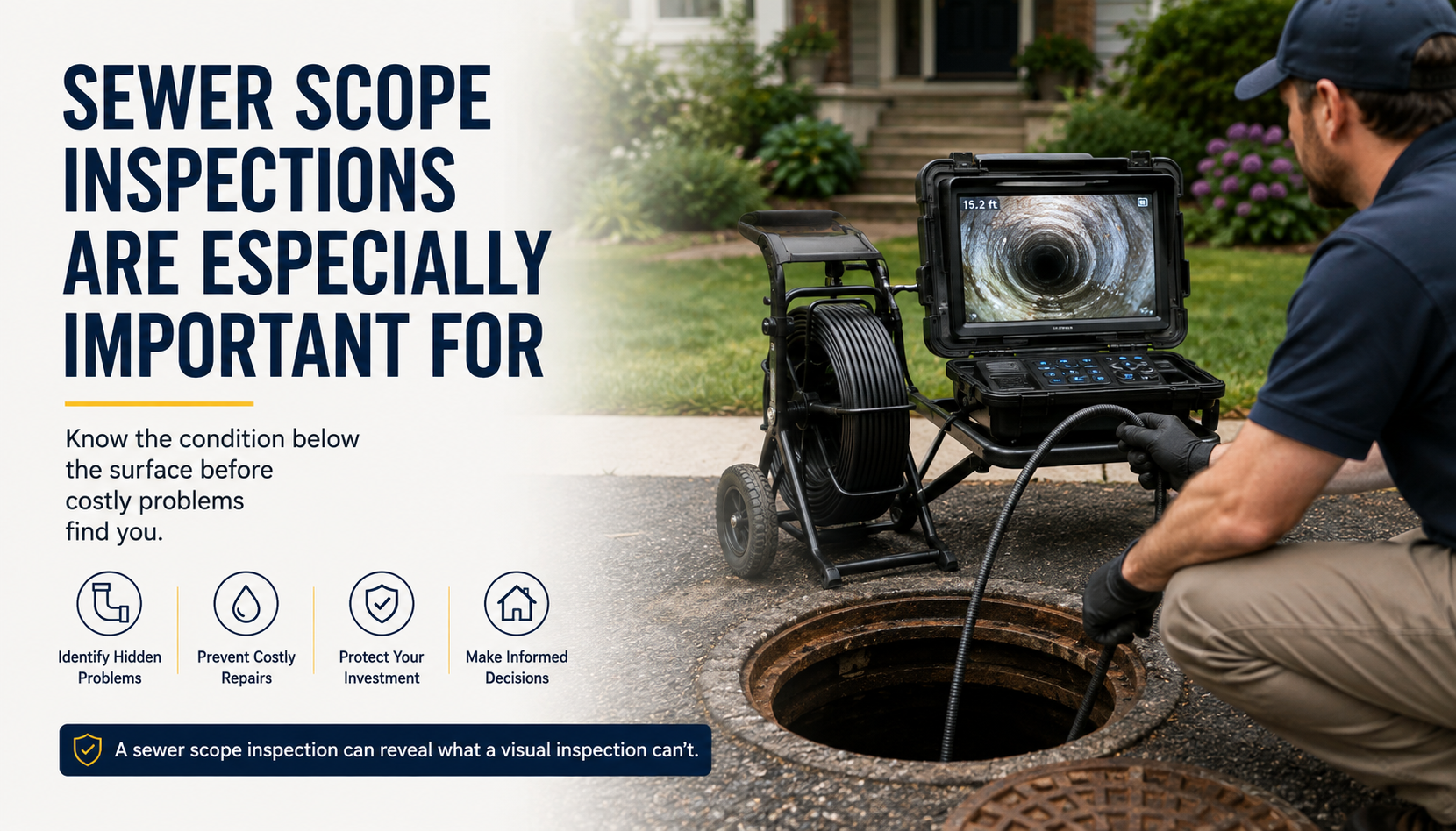
A sewer scope inspection uses a specialized camera that is inserted into the sewer line to visually examine the interior of the piping. The camera travels through accessible portions of the line, allowing the inspector to observe conditions that cannot be evaluated from inside the home.
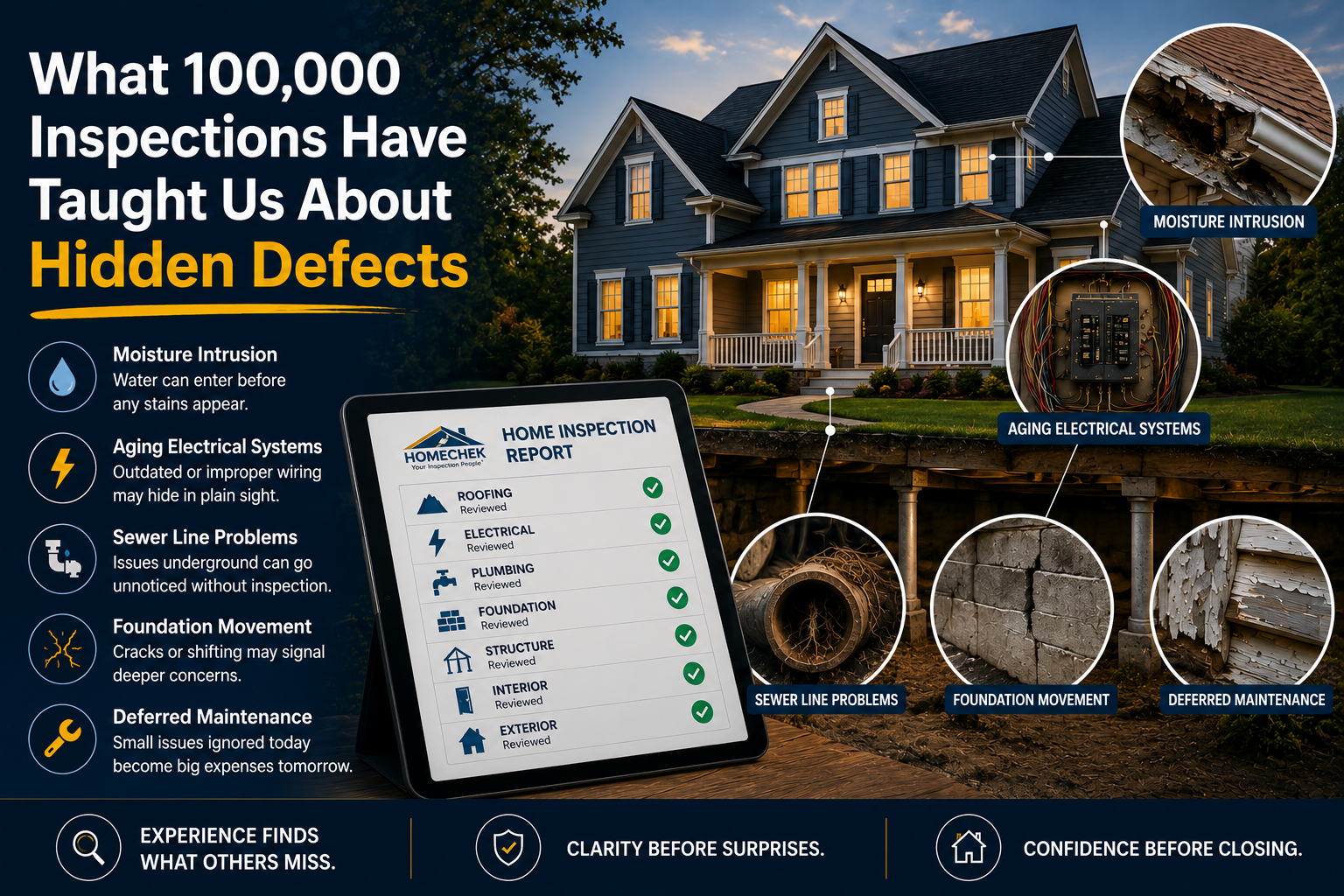
Because much of the sewer line is buried underground, significant problems can exist without obvious symptoms at the time of purchase.
A Sewer Scope May Reveal:
- Root intrusion from nearby trees growing into the line
- Cracked, offset, separated, or collapsed piping
- Blockages or buildup restricting normal flow
- Deterioration of older cast iron or clay piping
- Low areas or other drainage concerns affecting performance
- Conditions that warrant cleaning, repair, or further evaluation
Especially Worth Considering When:
- The home is older—particularly pre-1970s construction
- Mature trees are located near the suspected sewer line path
- Cast iron or clay piping may be present
- The sewer history of the property is unknown
- Previous sewer backups or drainage problems have been reported
- The buyer simply wants additional information before closing
Why Older Homes Deserve Extra Attention
Older properties can contain sewer materials that have been in service for decades. Cast iron and clay sewer pipes were commonly used in older construction, and age, soil movement, corrosion, tree roots, and previous repairs can all affect their condition.
Root intrusion is particularly important because tree roots naturally seek sources of moisture. Small openings or deteriorated joints in an underground sewer line can allow roots to enter and eventually restrict flow or contribute to additional damage.
A sewer line can also be functioning on the day of the home inspection while still containing conditions that deserve attention. Normal drainage from sinks and toilets does not necessarily tell you what is happening inside the buried piping.
A Small Inspection That Can Answer a Big Question
The cost of a sewer scope inspection is modest compared with the potential cost of repairing or replacing a damaged sewer line. Depending on the location and extent of the problem, repairs can involve excavation, landscaping, sidewalks, driveways, or other improvements.
For buyers purchasing an older home, a sewer scope can provide valuable information about a major component that would otherwise remain largely unknown.
The goal isn't to predict every future sewer problem. It's to learn as much as reasonably possible about the line's observable condition before you own it.
Clarity before surprises. Confidence before closing.
Before buying the house, it may be worth inspecting the pipe leaving it. A small camera can reveal very expensive surprises—before they become your problem.