Buying a brand-new home is exciting. Everything is new, the appliances haven't been used, and the builder has assured you that the home has passed all required inspections.
So why would you need to hire an independent home inspector?
Because new doesn't necessarily mean defect-free.
Even newly constructed homes can have installation errors, overlooked deficiencies, and workmanship issues that may not become apparent until after you move in.
Doesn't the Building Inspector Already Check Everything?
Municipal building inspectors play an important role in the construction process. Their responsibility is generally to verify compliance with applicable building codes at required stages of construction.
However, a municipal inspection is not the same as an independent home inspection.
A professional home inspector evaluates the home's accessible systems and components, looking for visible deficiencies, improper installations, and conditions that may require correction or further evaluation.
Both types of inspections serve important but different purposes.
When Should a New Home Be Inspected?
Ideally, buyers should consider two important inspection opportunities during construction.
1. Pre-Drywall Inspection
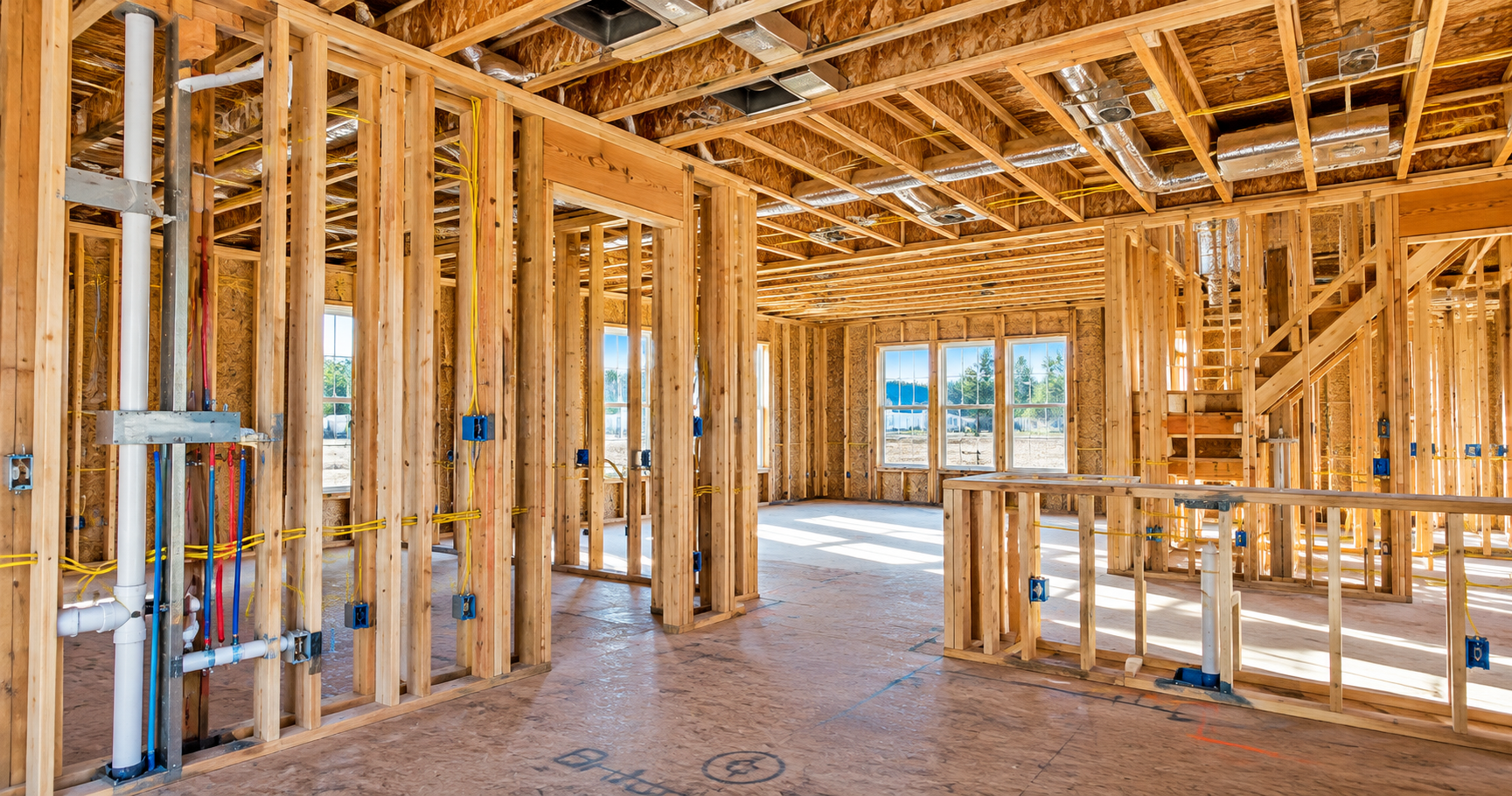
This inspection takes place after major framing, plumbing, electrical, and HVAC components have been installed but before the walls and ceilings are covered with drywall.
At this stage, the inspector can observe components that will eventually be concealed, including portions of the framing, electrical wiring, plumbing, and mechanical installations.
Identifying deficiencies before drywall installation may allow the builder to address them before construction progresses.
2. Final Home Inspection
A final inspection is generally performed when construction is substantially complete, preferably before the buyer's final walkthrough and closing.
The inspector evaluates accessible components such as the roofing, exterior, foundation, electrical system, plumbing, heating and cooling systems, attic, interior, and installed fixtures.
Even newly installed equipment and components can have deficiencies.
What Problems Are Found in Newly Built Homes?
Some conditions that may be identified during new construction inspections include:
-
Improperly installed or damaged roofing materials
-
Missing or improperly installed flashing
-
Electrical wiring and outlet deficiencies
-
Plumbing leaks or improper connections
-
HVAC installation or performance concerns
-
Missing insulation or ventilation deficiencies
-
Improper grading or drainage around the foundation
-
Windows and doors that do not operate properly
Not every new home will have significant deficiencies. However, identifying problems before closing can provide buyers with an opportunity to discuss corrections with their builder.
What About the Builder's Warranty?
A builder's warranty can provide valuable protection, but it does not replace an independent inspection.
Warranty coverage varies, and certain conditions may be excluded or subject to time limitations.
Some homeowners also choose to schedule an inspection before their one-year builder warranty expires to identify visible concerns that may warrant a warranty claim.
The Bottom Line
A newly built home represents a significant investment. Just because everything is new doesn't mean everything was installed correctly.
An independent inspection provides another set of experienced eyes to evaluate the property and help you better understand its condition.
At Homechek, we've been inspecting homes throughout Central Pennsylvania and Northern Maryland since 1993. Our experience includes existing homes, new construction, and inspections at various stages of the building process.
Whether you're purchasing a 100-year-old home or one that was completed yesterday, understanding its condition is an important part of making an informed decision.
A brand-new home isn't necessarily a defect-free home. An independent inspection can help identify problems before they become your responsibility.