
Older homes often have craftsmanship, charm, and architectural details that newer construction simply can't replicate. Wide-plank floors, solid wood trim, unique character—these are genuine features that attract buyers who appreciate quality and history.
But age can also hide conditions worth understanding before you commit to a purchase. What's behind the walls, beneath the floors, and running through the systems of an older home deserves careful attention. Here's what inspectors commonly find.
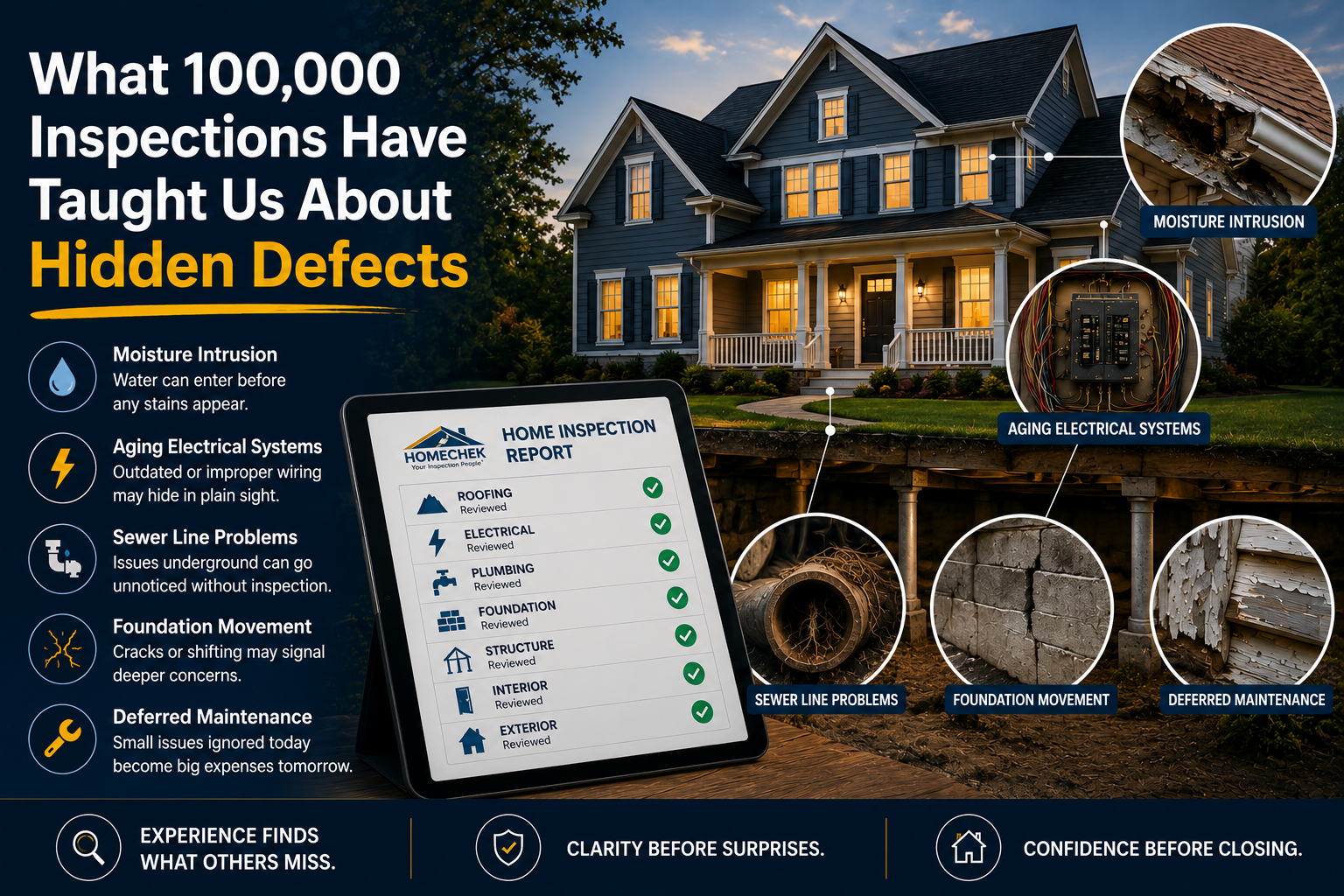
Common Issues We Often Find in Older Homes:
1. Aging Electrical Systems
Older wiring, outdated panels, or improper modifications made over decades may present safety or performance concerns. Common findings include knob-and-tube wiring remnants, double-tapped breakers, ungrounded outlets, and obsolete panels such as certain Federal Pacific or Zinsco brands.
2. Foundation and Structural Movement
Older homes settle. Some movement may be entirely typical—minor hairline cracks that have been stable for decades. Others deserve closer review by a structural professional. Experience helps distinguish the two.
3. Plumbing Surprises
Galvanized steel piping, aging cast-iron drain lines, hidden leaks, or sewer line concerns are common in older homes. Galvanized supply lines can corrode internally, reducing water pressure and quality. This is also why sewer scope inspections are strongly recommended on older properties.
4. Moisture and Drainage Issues
Basements, crawlspaces, grading, and older waterproofing systems can all contribute to moisture concerns. Older homes often lack modern vapor barriers or drainage systems, and decades of landscape changes can direct water toward the foundation.
5. Deferred Maintenance
Older homes may have layers of repairs accumulated over many decades. Some are thoughtful, well-executed upgrades. Others are temporary fixes that became permanent. A trained inspector can help distinguish good stewardship from deferred risk.
Older Homes Often Benefit From:
- Comprehensive home inspection with an experienced inspector
- Radon testing—older construction often has less effective sealing
- Sewer scope inspection—clay and cast iron lines are common in older properties
- Water testing where private well water is the source
- Specialty evaluations when indicated by inspection findings
Character is a feature. Hidden defects shouldn't be a surprise. Older homes don't need fear—they need understanding. That's exactly what a thorough inspection provides.