Why Visual Stucco Inspections Alone May Not Be Enough
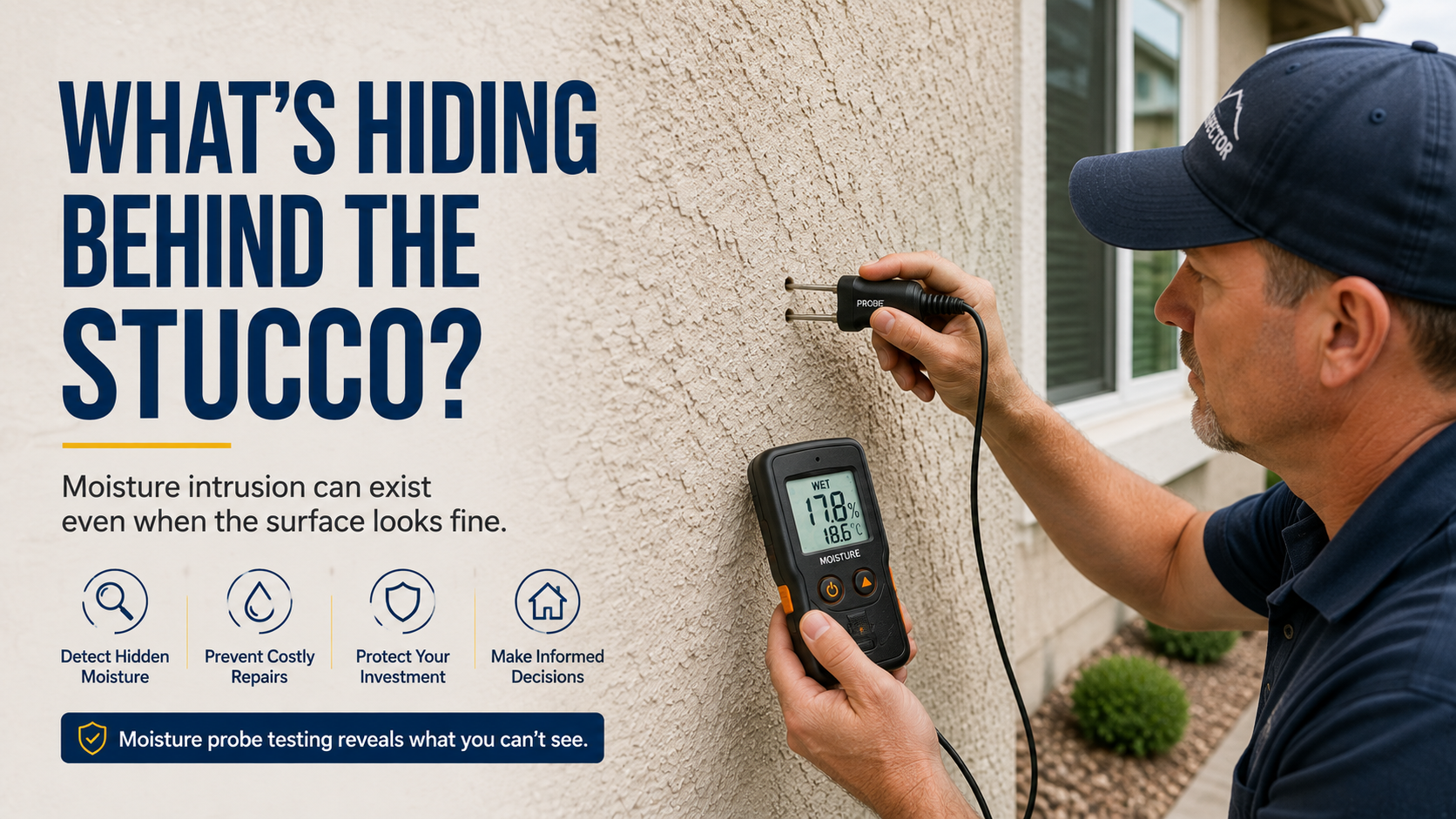
Stucco can look completely sound on the surface while elevated moisture conditions exist behind the cladding. A visual inspection can identify cracking, staining, improper clearances, missing sealant, flashing concerns, and other visible conditions, but it cannot determine the moisture content of concealed materials behind the stucco.
That's where moisture probe testing can provide valuable additional information.
A probe test involves creating small test openings at selected locations and inserting moisture-sensing probes through the stucco assembly to obtain readings from the underlying materials. Testing locations are typically selected around areas more susceptible to water intrusion, such as windows, doors, roof-to-wall intersections, penetrations, decks, and other vulnerable details.
Moisture Probe Testing May Help Identify:
- Elevated moisture conditions within the wall assembly
- Hidden moisture intrusion not visible at the surface
- Potential problems around windows, doors, flashing, and penetrations
- Areas where additional investigation or repairs can be warranted
- Conditions that could contribute to deterioration of concealed building materials
When Should Buyers Consider Moisture Probe Testing?
Testing can be particularly valuable for:
- EIFS or synthetic stucco homes
- Older stucco homes where installation details are unknown
- Homes with visible staining, cracking, separation, or deteriorated sealant
- Properties with questionable flashing or installation details
- Homes with a history of leakage or previous stucco repairs
- Buyers who want additional information about concealed moisture conditions before purchasing
Why It Matters
Water intrusion behind stucco can remain concealed for an extended period. When moisture reaches wood sheathing, framing, or other moisture-sensitive materials, deterioration can occur without obvious symptoms on the finished exterior.
Repairs can involve much more than simply patching the stucco. Depending on the conditions discovered, remediation can include removal of exterior cladding, replacement of damaged sheathing or framing, correction of flashing and drainage details, and installation of new exterior finishes.
Moisture probe testing does not mean a stucco home has a problem. It provides another level of information that a visual inspection alone cannot provide.
For a buyer considering a stucco-clad property, identifying elevated moisture conditions before closing can provide an opportunity to obtain additional evaluation, understand potential repair needs, and make a more informed purchasing decision.
The surface only tells part of the story. Sometimes the most important information is behind the stucco.
Surface appearance alone does not always tell the whole story. For stucco homes, probe testing can provide critical insight that a visual inspection simply cannot offer.