Many homebuyers hear the terms “WDI inspection” or “WDO inspection” and aren't sure what they mean. WDI stands for Wood-Destroying Insect, while WDO generally refers to Wood-Destroying Organism. The terminology and inspection requirements can vary by state, but the purpose is similar: identifying visible evidence of organisms that can damage wood or wood structural components.
These inspections are separate from—and complement—a general home inspection. Depending on the location and applicable requirements, the inspection can look for active infestation or infection, evidence of previous activity, visible damage, and conditions that can contribute to future problems.
What Does a WDI or WDO Inspection Look For?
An inspection can include looking for visible evidence such as:
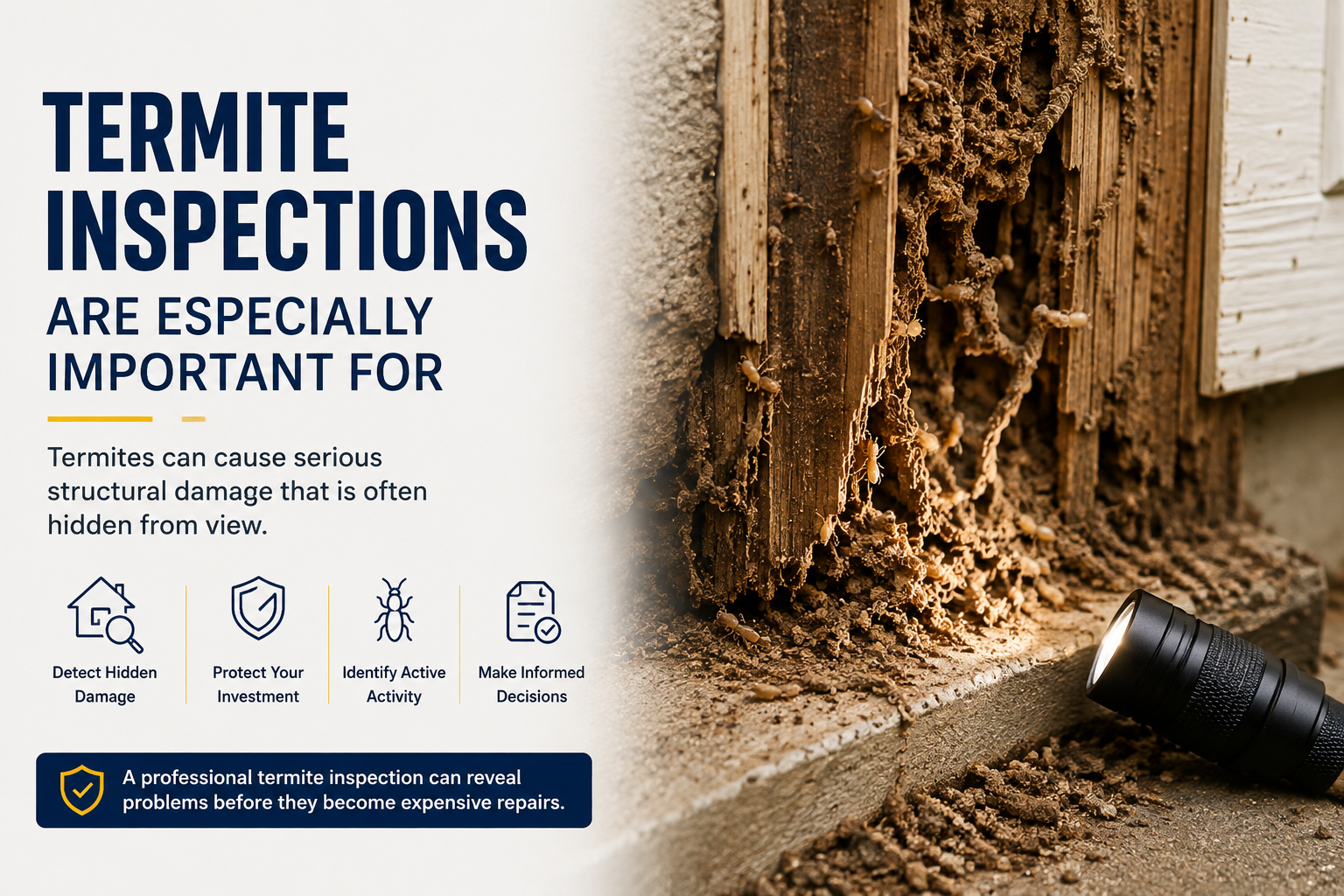
- Shelter or mud tubes associated with subterranean termites
- Damaged, weakened, or hollowed wood
- Frass or other evidence associated with wood-destroying insects
- Evidence of wood-destroying beetles or other applicable insects
- Wood decay or fungal activity where included under applicable WDO requirements
- Conditions conducive to infestation or deterioration, including excessive moisture and wood-to-soil contact
- Evidence of previous treatment or prior infestation activity
Because inspection standards and reporting requirements vary by state, the specific organisms included and the terminology used on the report can differ.
Do You Need a WDI or WDO Inspection?
A WDI or WDO inspection can be particularly important when:
- It is required by the lender, loan program, or another party to the transaction
- The property is located in an area with significant termite or wood-destroying organism activity
- You are purchasing an older home with an unknown treatment or infestation history
- Visible conditions raise concerns about possible insect or organism activity
- You want additional due diligence before purchasing the property
Why a General Home Inspection Isn't the Same Thing
A home inspector can observe and report visible conditions that suggest possible insect damage, moisture deterioration, or other concerns. However, a general home inspection does not necessarily replace a specialized WDI or WDO inspection performed in accordance with applicable state requirements.
That distinction is important. Damage can exist in concealed or difficult-to-access areas, and evidence of an infestation isn't always obvious to a buyer during a showing or walkthrough.
Why It Matters
Wood-destroying insects and organisms can affect structural framing, flooring systems, sill plates, joists, beams, and other wood components. When significant damage is present, repairs can become expensive.
Identifying evidence before closing gives buyers an opportunity to better understand the condition, obtain additional evaluation when appropriate, discuss treatment or repairs, and make a more informed purchasing decision.
A WDI or WDO inspection isn't about creating unnecessary concern. It's about obtaining another important piece of information about the property before making a major investment.
Clarity before surprises. Confidence before closing.
Hidden damage is not always obvious. Termite activity can go undetected for years inside walls and structural members. Inspection brings clarity before it becomes your problem.