If you've ever read a home inspection report and seen the phrase "Further Evaluation Recommended," you may have wondered: Is something seriously wrong? Should I be worried? What am I supposed to do next?
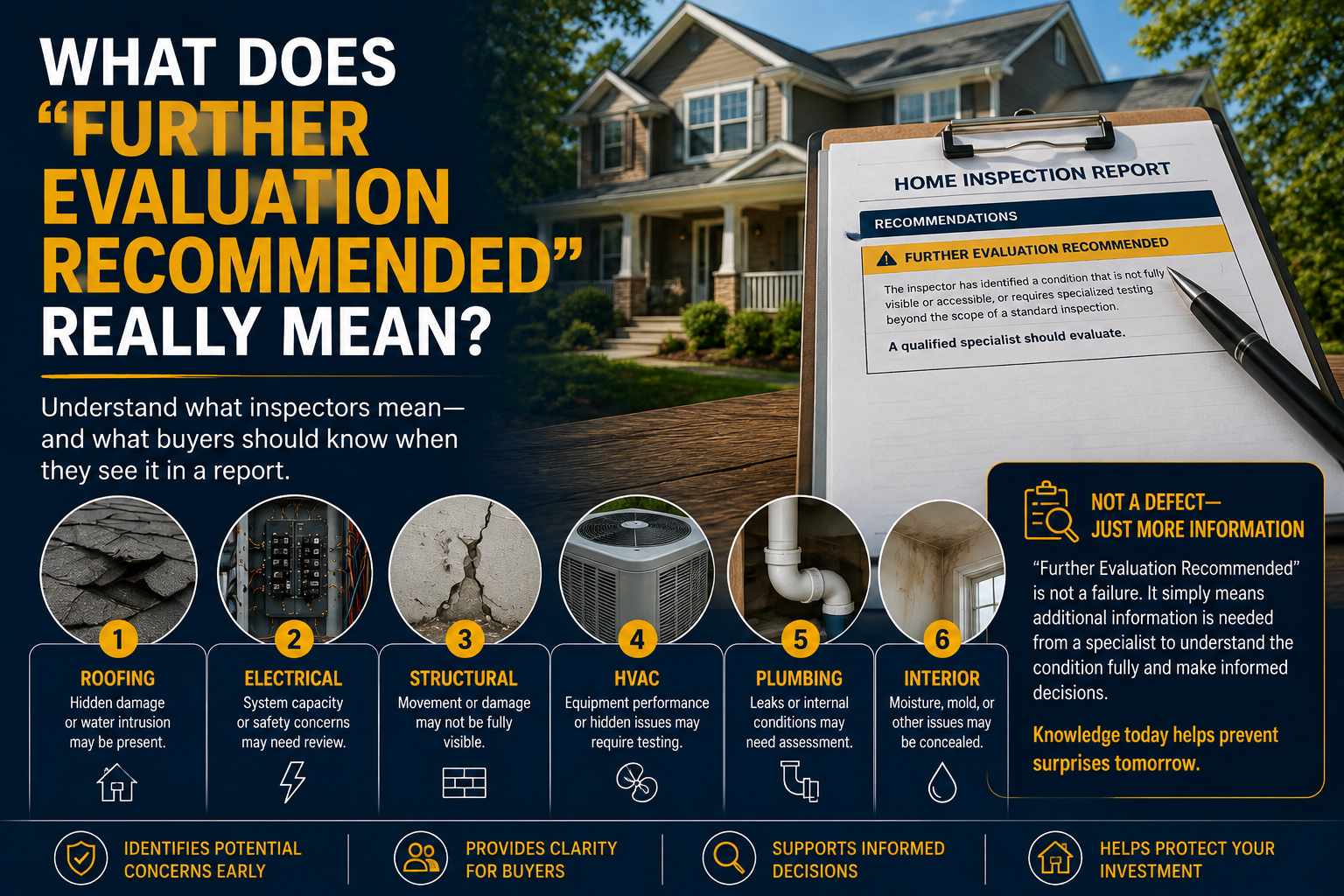
Usually, the recommendation is not a reason to panic. It means the inspector observed a condition that deserves additional review by a qualified specialist before closing—not that a serious defect has automatically been confirmed.
The recommendation is intended to help you obtain more information when the limits of a home inspection prevent the inspector from determining the full extent, cause, or significance of a condition.
Why Inspectors Use This Recommendation
Home inspectors are generalists. They perform a visual inspection of accessible systems and components throughout the property. Some conditions, however, require specialized knowledge, testing, equipment, dismantling, or analysis that goes beyond the scope of a standard home inspection.
That's where further evaluation comes in.
The inspector is essentially saying: "I found something that deserves additional attention, and the appropriate specialist can provide more information."
Examples May Include:
- Suspected structural movement requiring evaluation by a structural engineer
- HVAC performance concerns needing review by a qualified HVAC specialist
- Roofing conditions that warrant evaluation by a roofing specialist
- Possible electrical safety concerns requiring further evaluation by a qualified electrician
- Foundation cracking patterns suggesting additional structural evaluation
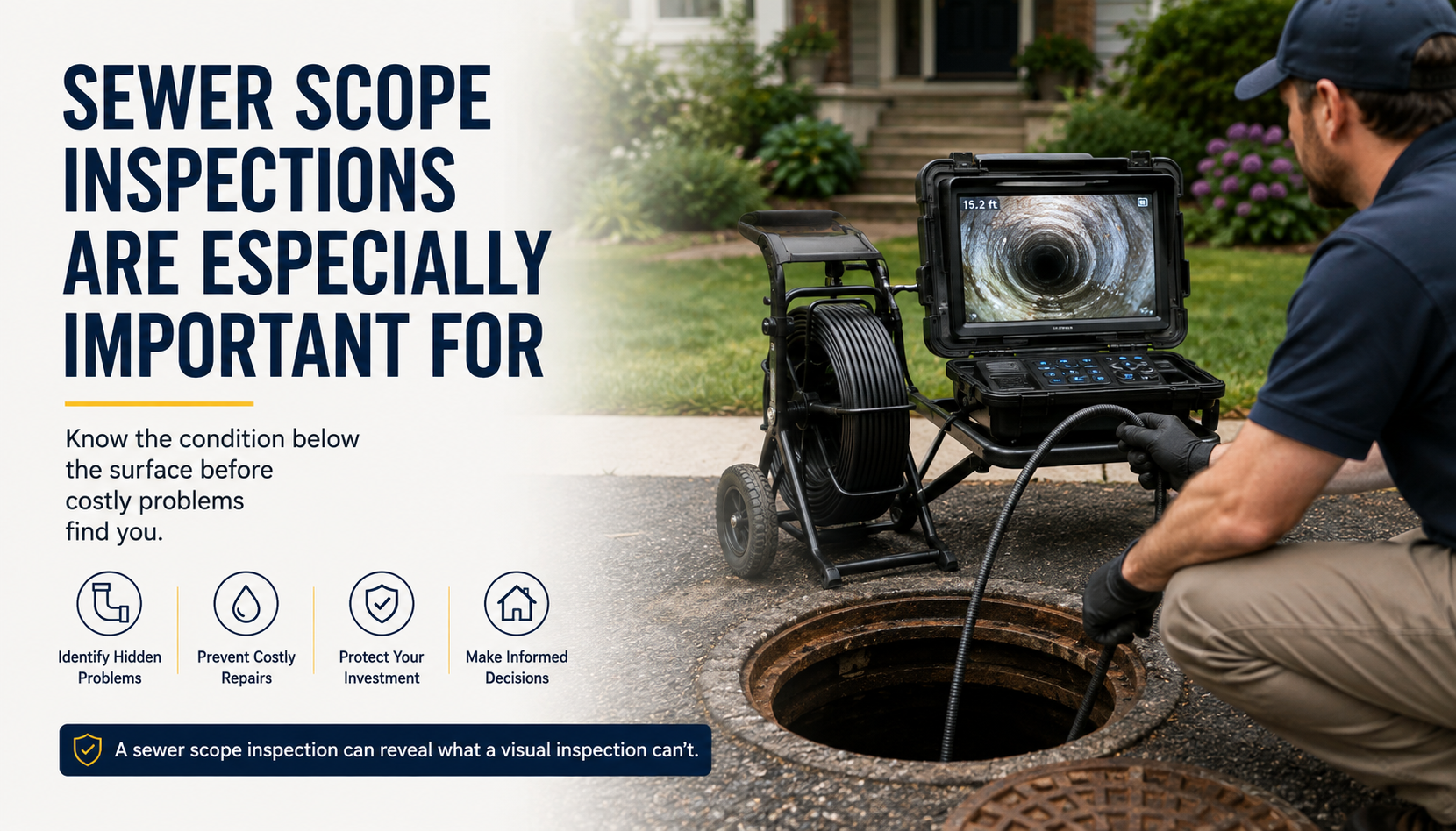
- Plumbing or sewer concerns needing further testing or a sewer scope inspection
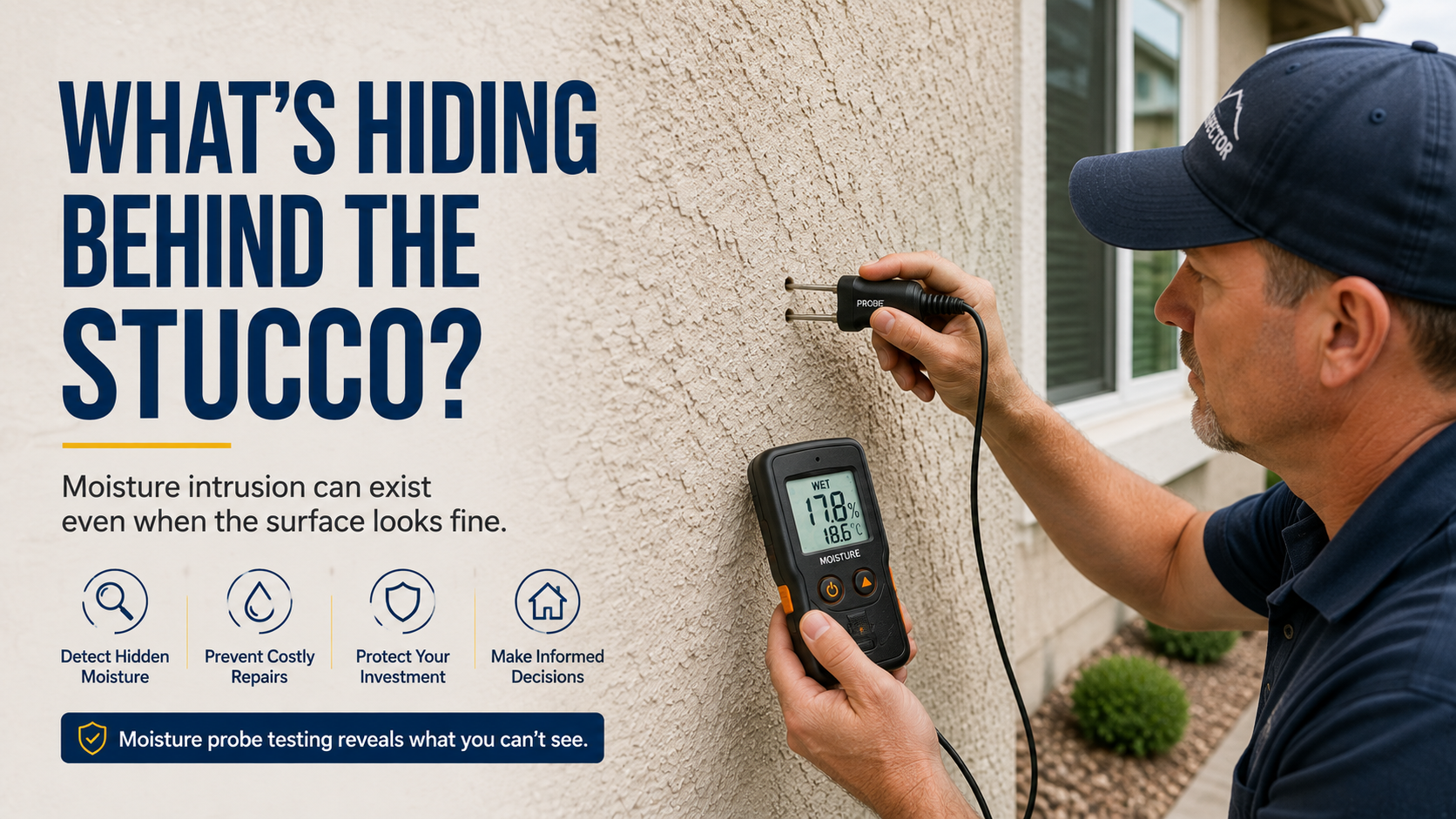
- Evidence of moisture intrusion where the source or extent cannot be determined
- Conditions concealed behind walls, ceilings, insulation, finishes, or other inaccessible areas
Sometimes the specialist determines that only a minor repair is needed. Other times, additional investigation can uncover a more significant condition. That's precisely why obtaining more information before closing can be valuable.
What It Does NOT Mean
"Further Evaluation Recommended" does not automatically mean the house is unsafe, the transaction should be canceled, expensive repairs are guaranteed, or the inspector is unnecessarily alarming you.
It also doesn't mean the inspector has diagnosed a condition outside the scope of the home inspection.
Often, it simply means: get one more informed opinion before making your decision.
Why Further Evaluation Can Be Important Before Closing
A real estate transaction has deadlines. Once the inspection contingency period has passed or the property has closed, the buyer's options can change significantly.
When an inspection report recommends further evaluation, addressing that recommendation promptly can help establish whether repairs are necessary, how extensive they might be, and whether additional information should be considered before moving forward with the purchase.
The purpose isn't to predict the worst-case scenario. It's to reduce uncertainty.
What Buyers Should Do
- Ask your inspector specific questions about what prompted the recommendation.
- Understand whether it's a common finding or an unusual concern for the property.
- Determine what type of qualified specialist should perform the additional evaluation.
- Arrange the evaluation within your inspection contingency period whenever possible.
- Use the additional information to make an informed decision about repairs, negotiations, or moving forward with the purchase.
More Information Leads to Better Decisions
A professional home inspection can't answer every possible question about a property. No inspection can see through walls, predict future failures, or diagnose every condition encountered.
What a good inspection can do is identify observable conditions, explain their significance, and tell you when additional information is warranted.
A recommendation for further evaluation isn't an unanswered question that should be ignored. It's guidance about where obtaining another level of information can help.
Clarity—not confusion—is the goal.
After more than 100,000 inspections, one lesson has remained consistent: sometimes the smartest sentence in an inspection report is the one that tells you there's more to learn.
Think of 'Further Evaluation Recommended' as a caution flag—not a stop sign. It is an invitation to gather more information before making a major financial commitment.