Radon is a potential concern in homes throughout the United States. If you are buying, selling, or living in a home, radon is an important environmental condition that should not be overlooked.
Radon is a naturally occurring radioactive gas produced by the breakdown of uranium in soil and rock. As radon forms underground, it can move through the soil and enter buildings through foundation cracks, construction joints, gaps around plumbing and utilities, sump pits, crawl spaces, and other openings.
Once inside a home, radon can accumulate to elevated concentrations, particularly in basements and lower levels.
Why Is Radon a Concern?
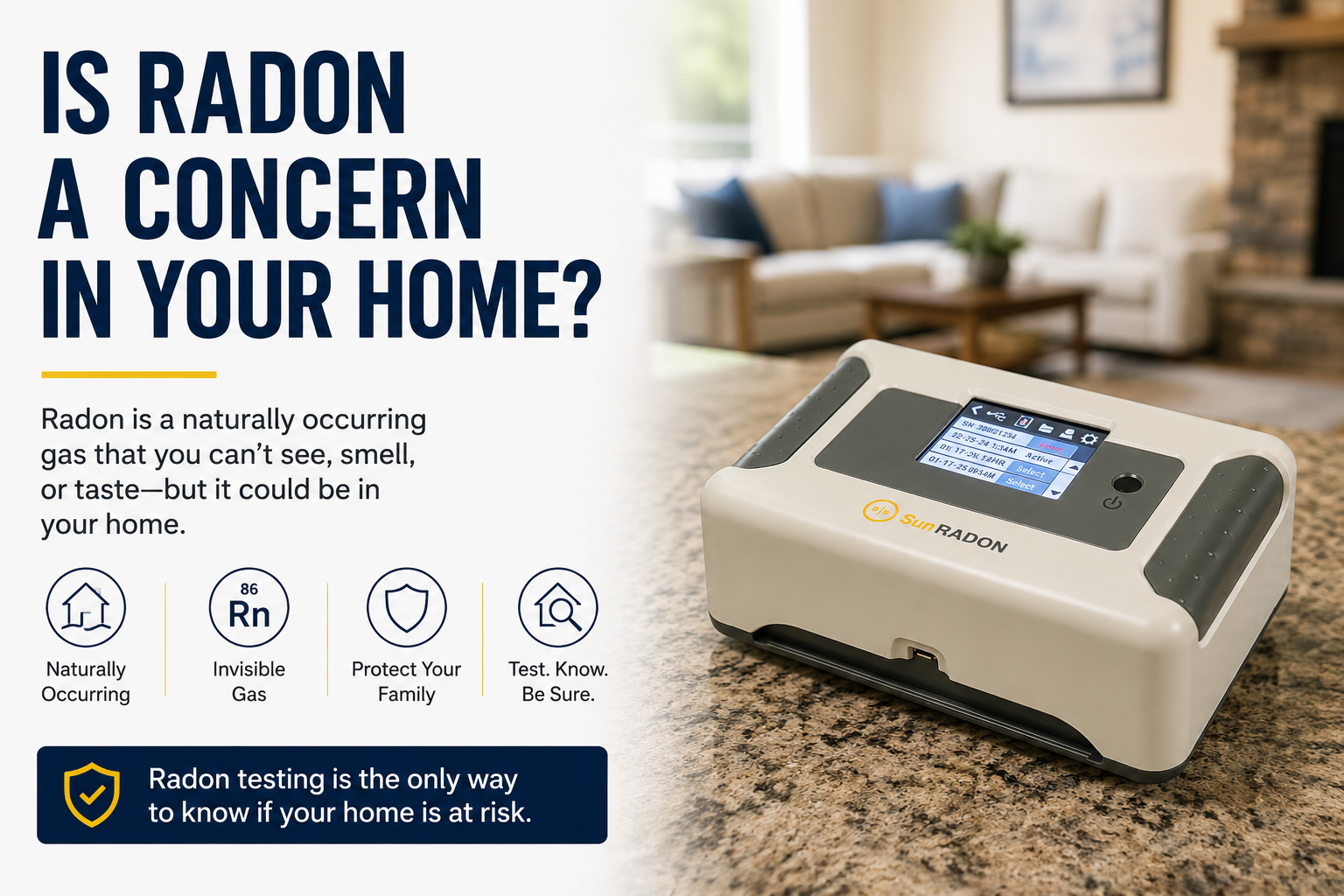
One of the biggest concerns about radon is that it has no color, odor, or taste. There are no obvious warning signs that tell a homeowner or buyer whether elevated radon levels are present.
The only way to determine the radon concentration in a home is through testing.
Radon levels can vary significantly from one property to another. Two homes located next door to each other can have very different test results because of differences in soil conditions, foundation construction, ventilation, and pathways that allow soil gases to enter the structure.
Can Any Home Have Elevated Radon?
Yes. A common misconception is that radon is primarily a problem in older homes or in certain types of construction.
In reality, elevated radon levels can occur in homes of any age, size, construction style, or foundation type. Newer construction does not automatically mean that a home will have low radon levels.
Geographic radon potential also varies throughout the country. Some areas have a greater likelihood of elevated radon concentrations, but a home's actual radon level cannot be determined from a map or geographic location alone.
When Should Radon Testing Be Performed?
For homebuyers, a real estate transaction is an excellent time to perform a radon test. Testing before closing provides information about the home's current radon level and allows the parties to address elevated results before ownership changes.
The U.S. Environmental Protection Agency recommends taking action to reduce radon levels when testing shows concentrations at or above 4.0 picocuries per liter (pCi/L).
If elevated radon levels are detected, mitigation systems can often reduce concentrations substantially. These systems typically work by collecting radon-containing soil gases beneath the home and safely venting them to the exterior.
Testing Provides the Answer
You cannot determine whether a home has elevated radon by looking at it, smelling the air, considering its age, or evaluating its general condition.
Testing provides the information needed to make an informed decision.
Whether purchasing an older home, new construction, a property with a basement, or a home built on a slab or crawl space, radon testing is a valuable part of environmental due diligence.
You can't see radon. You can't smell it. Testing is how you know.
Testing is the only way to know. Radon has no smell, no color, no warning signs. Elevated levels are only confirmed through a proper test.